Have yellow stains appeared on your clothes? Perhaps on a pillow or towel? Or does a white shirt appear more yellow compared to a new white shirt? We’ve compiled the possible causes!
Let the stain investigation begin!
The location, size, and type of garment affected by a stain can reveal a lot about the likely causes, so let’s start there!
Which garment or textile do we see turning yellow?
For shirts, blouses, and outerwear, stains typically appear on the collar, underarms, and cuffs due to sweat and body oils. These bodily secretions penetrate the fabric. The salts and oils in sweat oxidize when exposed to air and, combined with detergent residues from overuse, can cause localized yellowing.
For white or pastel summer garments made of cotton or linen, prolonged exposure to sunlight accelerates fiber aging. This biological degradation (photodegradation) leads to yellowing.
Among synthetic fibers, nylon (polyamide), polyester, and elastane are prone to yellowing.
Real silk can yellow significantly if the silkworms were not fed appropriately.
For outdoor textiles (umbrellas, pillow covers, deck chair linings) and indoor-outdoor curtains, sunlight fades the color and accelerates fiber aging in white fabrics. In addition to yellowing, tears are common, and the fabric can almost disintegrate.
What triggers the appearance of yellow stains?
- For towels and bed linens, yellow stains often appear after drying or ironing if the fabric was used for cleaning or if a cleaning cloth was thrown into the wash. In this case, it is likely that the textile came into contact with chlorine-containing agents, and the high temperature “brought out” the effect of the chlorine, accelerating its action.
- Stains appearing after washing: Simply put, chemicals can clash. Detergents, bleaches, fabric softeners—and even well-meaning home remedies—can trigger incompatible chemical reactions. Technically, amine-containing softeners react with free chlorine present in chlorine-based bleaching or disinfecting agents, forming chloramines, which produce a yellow discoloration.
- Many fabric softeners contain so-called optical brighteners. These are designed to enhance the perception of whiteness (by reflecting more bluish light, which the human eye interprets as whiter). However, unfavorable conditions, such as excessive heat or high humidity, can oxidize the optical brighteners, eliminating their whitening effect. Excessive optical brightener content can thus cause yellowing.
- Air pollution and environmental factors: Nitrogen oxides are a major cause of yellowing. Harmful nitrogen compounds are released into the air from certain industrial equipment and the exhaust of internal combustion engines. These pollutants react with residues on the textile surface, leading to yellowing.
- Products taken out of plastic packaging: Some polyethylene films in contact with textiles can cause yellowing. For example, films containing phenol derivatives labeled BHT—added as antioxidants to prevent aging and preserve quality in detergents—can induce yellowing upon contact with fabrics.
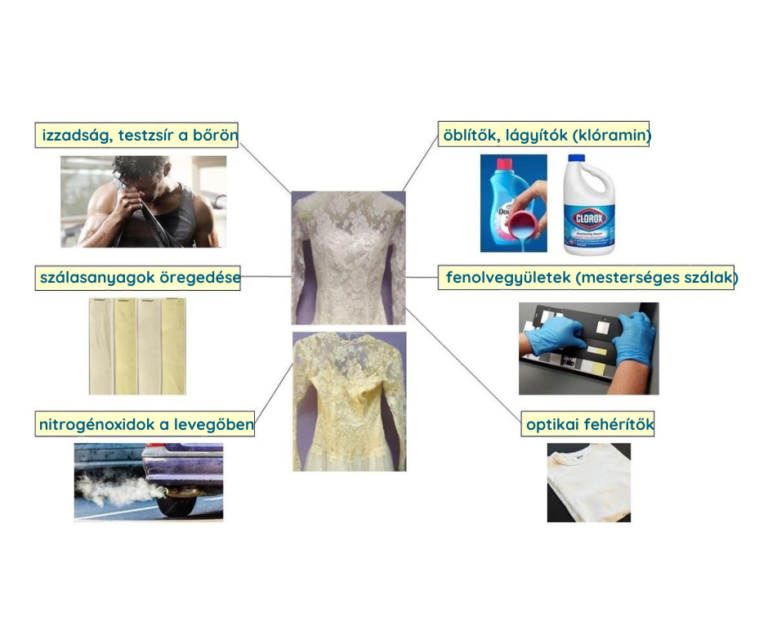
The main causes of yellowing in white textiles: We asked Csaba Kutasi, forensic expert, what can be done to reduce yellowing.
Recommended measures:
- Frequent washing of garments that come into direct contact with the skin.
- Using the optimal amount of detergent and thorough rinsing to avoid detergent residues (the pH of the fabrics should be slightly acidic or neutral).
- Drying washed textiles in the shade (or using a lower-temperature program in the dryer).
- Proper storage of dry items (in a cool place, in breathable containers).
Among home remedies, baking soda can help remove dirt and improve whiteness, while detergent residues and lingering odors can be eliminated with a vinegar-based soak.

Csaba Kutasi – textile chemist, industrial engineer, forensic expert, and specialist author
- He worked for decades in the Hungarian textile industry in leadership and quality management positions.
- As an instructor and author of study materials, he has made significant contributions and is a dedicated supporter of training the next generation of professionals.
- He has been an active member of the Textile Technical and Scientific Association since 1969, and his work has been recognized with several professional awards, including the MTESZ Commemorative Medal.
What is the most common cause of yellow stains on clothes?
Most often, it’s the reaction between sweat, body oils, and detergent residues—especially around the armpits and collar.
Why do white clothes turn yellow after washing?
Different chemicals (detergent, softener, bleach) can react with each other, leading to yellow discoloration.
Can sunlight cause yellowing?
Yes. Excessive UV exposure damages textile fibers, which can lead to yellowing over time.
How can I prevent yellow stains?
Use the right amount of detergent, rinse thoroughly, avoid high temperatures, and dry clothes in the shade when possible.